Dot Drama: Binge Short Stories
- 4.7
- Rating
- 10.00M
- Installs
- Free
- Price

 Analysis by App-foxy
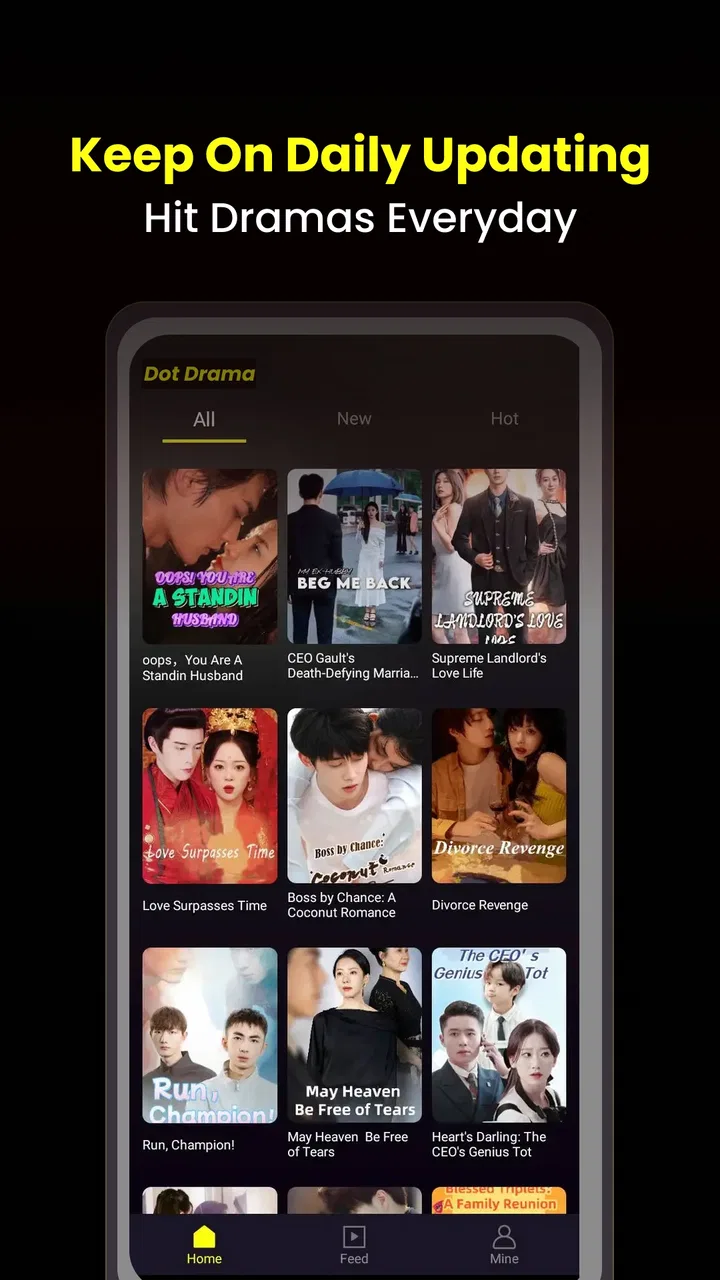
I approached Dot Drama: Binge Short Stories as a quick entertainment app rather than a traditional reading platform. Its focus is easy to understand: short, emotionally charged stories built around romance, betrayal, revenge, ambition, and clashes between wealthy or powerful characters. That makes it a natural fit for the moments when I want something dramatic enough to hold my attention but compact enough to enjoy between errands, during a commute, or before bed.
My first impression was that the app knows exactly what kind of mood it is targeting. This is not quiet literary fiction, a news reader, or a general video service. It is designed for people who enjoy fast emotional turns and stories that make it tempting to continue immediately after a chapter ends. The developer is Agile Teams, and the app is free to install, although optional purchases range from $0.99 to $29.99 per item. That combination makes it easy to try, but it also means I would pay attention to the point at which free viewing ends and purchasing becomes part of the experience.
How the short-story format feels in everyday use
The strongest reason to try this app is convenience. A long novel asks me to remember characters, settings, and subplots over several sessions. Dot Drama’s shorter format is better suited to fragmented time. If I have ten minutes while waiting for an appointment, I can open it with a clear expectation that I am entering a focused dramatic scene rather than committing to a full-length book.
You May Also Like

 Blood Strike: 2.5 Anniversary
Blood Strike’s Loadouts Turn Every Drop Into a Tactical Gamble
A close look at Blood Strike’s custom loadouts: how fast access to signature weapons reshapes its battle royale rhythm, rewards preparation, and narrows the gap between fights.

 Pandora - Music & Podcasts
Pandora’s Music Is Easy to Start, but Harder to Recover
Pandora’s strength is its low-effort path from a seed to a station. Its weak spot is how much confidence it asks you to place in connection, setup, and quiet recovery.

 8 Ball Pool
 Is Built on Rivalries, Rematches, and Routine
A close look at the rivalries, rematches, shared routines, and unanswered safety questions that turn a quick pool match into a persistent mobile community.

 Samsung Music
’s Quiet Strength Is Playing What You Already Own
Its reach comes less from spectacle than from dependable access to a personal library. That simplicity is both the app’s strongest retention engine and its ceiling.

 AccuWeather: Weather Radar
AccuWeather Review: A Quick, Clear Forecast for Everyday Decisions
For everyday plans, the best forecast is the one you can understand quickly. AccuWeather makes rain timing, radar, and local conditions easy to act on, with a few trade-offs.

 Hill Climb Racing
Why Hill Climb Racing Still Turns Crashes Into One More Run
A tiny car, a bumpy hill and one more upgrade: Hill Climb Racing keeps resurfacing because its simple chaos makes every near-miss feel personal.
More From Our News Desk



That format also changes how I judge the writing. A short episode does not have much room for slow introductions, so the appeal depends on immediate conflict. The themes advertised for the app point toward heightened situations: romantic tension, emotional reversals, revenge, and power struggles. Readers who like subtle realism may find that style too intense, while anyone who enjoys cliffhangers and decisive confrontations will probably understand the attraction quickly.
I would use it differently from a conventional ebook app. With an ebook, I usually choose one title and settle into a sustained reading session. Here, I would treat the app more like a rotating shelf of dramatic breaks. One practical habit is to stop after a natural scene instead of automatically continuing whenever the next episode is offered. That keeps the experience relaxing and helps prevent a short break from turning into a much longer session.
The app’s entertainment category is important because it sets the right expectation. I would not choose it when I need educational material, serious reference reading, or a carefully researched account of real events. I would choose it when I want fictional escapism with a strong emotional hook. That distinction sounds simple, but it prevents disappointment: the value is in the mood and momentum, not in replacing a book library or a streaming service.
Who is likely to enjoy it
I think it will suit readers who prefer stories that get to the point. If your favorite plots involve secret relationships, social status, revenge plans, or characters trying to regain control after betrayal, the subject matter should feel familiar in a good way. It is also a reasonable option for people who find long novels difficult to start because each short installment creates a smaller commitment.
It is less suitable for someone looking for a completely open reading experience. The app’s identity is narrow by design, and that is both its appeal and its limitation. A person who wants mysteries, history, science fiction, comedy, essays, or independent literary work may find a broader reading service more useful. Likewise, if you dislike melodrama or stories built around sharp emotional conflict, the short format will not solve that problem; it may make the intensity more noticeable.
A realistic everyday use would be a late afternoon break. I might have finished work but not yet have the concentration for a full film. Opening a short story gives me a contained way to switch off. I would keep notifications and purchase prompts in mind, though, because the most convenient entertainment apps are also the ones that can encourage an automatic “just one more” habit.
What the popularity tells me, and what it does not
The app has a 4.7 average from around 62 thousand ratings, with more than 10 million installs. Those figures suggest that the basic concept has found a large audience, and they make the app worth investigating if this is your preferred kind of entertainment. They do not guarantee that every story will match my taste. A high overall score can reflect strong satisfaction with the format while individual plots still vary in tone, pacing, or emotional appeal.
I also noticed that the app has 275 reviews displayed alongside those ratings. I would read recent comments before spending money, especially if I cared about a particular story or wanted to understand how the free portion works in practice. Reviews can be most useful when they discuss the reading flow, purchase interruptions, and account experience rather than simply saying that a story was exciting.
Trust, controls, and the choices I would make before reading
Because this is an entertainment app rather than a tool I need for work, I would apply a simple trust test: does it give me clear choices, and can I avoid spending or sharing more than I intended? The app is free, carries a Teen content rating, and includes in-app purchases. That combination makes parental awareness and personal spending controls relevant even for casual users.
I would begin by checking the device’s permission prompts carefully instead of approving everything automatically. A permission request should have an obvious connection to what I am doing. If a prompt appears while I am only reading, I would pause and decide whether it is necessary for the specific function I want. This is not a claim about which permissions the app requests; it is simply the safest way to handle any entertainment download.
The same principle applies to account controls. I would look for the visible account, subscription, purchase, and notification settings before becoming deeply invested in a story. Knowing where those controls are gives me more agency later. If I use a shared device, I would be particularly careful with purchase authentication and saved payment options, because a dramatic cliffhanger can make an optional purchase feel more urgent than it really is.
The Teen rating deserves practical attention rather than being treated as a decorative label. The themes of romance, revenge, and power conflicts can involve emotional situations that are not ideal for younger children, even when the format looks lightweight. I would not hand the app to a child simply because each installment is short. For families, the sensible approach is to review the device’s parental controls and make sure purchases require approval where appropriate.
Handling data-sensitive moments without guessing
When I review an app from a trust perspective, I separate visible choices from assumptions. I would not infer that an app is private merely because it is used for fiction, and I would not assume that it collects extensive information without seeing a clear disclosure. Instead, I would inspect the permission dialog, privacy information, sign-in screens, and any choices presented around personalization or notifications.
My most cautious moments would be account creation, payment, and any request to connect another service. I would ask myself whether I need an account to browse, whether I am comfortable saving payment information, and whether a notification is genuinely useful or simply designed to pull me back into a cliffhanger. If the app lets me continue with fewer details, I would choose that route. If it requires information I do not want to provide, I would stop rather than invent a reason to trust the request.
For payments, I would treat the listed range of $0.99 to $29.99 per item as a reminder to set a personal limit before reading. The lower price can feel insignificant when repeated, while the upper end is large enough to deserve a deliberate decision. I would never buy immediately after an emotional ending. Instead, I would close the purchase screen, decide whether I still want the next installment after a short pause, and confirm the amount through the platform’s own payment screen.
Another useful habit is to distinguish a story choice from a device choice. If I want to stop reading, I should be able to close the app rather than feeling that I have to disable something complicated. If I no longer want alerts, I would check the app’s visible notification setting and the operating system’s notification controls. Using both gives me a clearer way to regain quiet time.
Where user agency matters most
The biggest agency issue in this kind of app is pacing. Short stories are built to create momentum, and momentum can make my next action feel automatic. I would decide in advance whether I am browsing, reading one installment, or continuing a story for a longer session. That small boundary is surprisingly useful because it turns the app from an impulse loop into a choice I am making consciously.
I would also keep a note of unfinished stories if the app presents several tempting options. Jumping between dramatic plots can make the experience confusing, especially when character names and conflicts begin to blur together. A simple personal note with the story title and the last scene I remember is a better way to manage several series than relying on memory alone.
If a story stops being enjoyable, I would leave it. The short format creates the impression that finishing is easy, but entertainment should not feel like homework. This is especially important when a plot becomes repetitive or when the emotional conflict no longer feels rewarding. A broader reading app may be a better choice for readers who want stronger discovery tools, longer-form continuity, or more control over genre and author selection.
Version 2.0.3 is the current version, and the app supports Android 7.0 or later. That makes compatibility a practical check before installing, particularly on an older phone or tablet. I would update through the normal platform channel and review any new permission or account prompt after an update rather than assuming that every screen will remain unchanged.
How it compares with familiar alternatives
Compared with a standard ebook reader, Dot Drama is more immediately dramatic and less flexible as a general reading environment. An ebook service usually gives me access to longer works and a wider range of genres, while this app is more focused on quick, emotionally charged fiction. I would pick the ebook reader for a holiday novel or a carefully paced mystery, but I would pick Dot Drama for a short break when I want tension right away.
Compared with a video streaming service, it asks less of my surroundings. I can read without sound, without committing to a full episode, and without needing the same amount of visual attention as a show. On the other hand, a streaming service may offer more polished production, acting, and visual storytelling. If I am tired and want passive entertainment, video may win. If I want to participate through reading while keeping the session compact, this app has the advantage.
Compared with social media, the experience is more focused. Social feeds constantly change direction, while a short story gives me a defined emotional thread. That can be healthier for concentration, but it can also make cliffhangers more persuasive because the app has one clear goal: keep me inside the story. I would use it when I want a deliberate break, not as an automatic replacement for every idle moment.
Compared with free fiction websites, the deciding factor would be convenience and presentation rather than the mere existence of stories. A website may offer more variety or fewer app-specific purchase prompts, while a dedicated app may feel smoother for repeated short sessions. I would compare the actual reading flow and costs before committing to a long series, particularly if I already have a source of free stories that satisfies me.
Small habits that improve the experience
Set a reading boundary before opening a cliffhanger. Decide whether the session is for one installment or a longer block, then stop at that boundary even when the plot is designed to pull you onward.
Review purchase authentication before browsing deeply. This reduces the chance of an accidental tap becoming a real charge, especially on a shared device.
Use the Teen rating as a conversation point. If a younger family member wants to read, check the device’s parental controls and discuss the themes instead of judging suitability by the short length alone.
Check permissions when a prompt appears. Approve only what makes sense for the action on screen, and revisit the operating system controls if your preferences change.
Leave weak stories early. The app works best when the emotional style matches your taste; forcing yourself through a repetitive plot makes the short format feel less convenient.
These habits do not change the stories themselves, but they make the app easier to fit into real life. They also address the areas I care about most with free entertainment: control over time, control over spending, and a clear understanding of what I am choosing to do.
My cautious verdict
I would recommend Dot Drama to a friend who enjoys compact romance and revenge fiction, especially if that friend likes powerful characters, emotional reversals, and stories that are easy to sample in short sessions. The large audience and strong average rating make it a credible option in this narrow entertainment space, while the free entry point keeps the initial decision simple.
My recommendation comes with boundaries. I would not treat it as a replacement for a full ebook library, a broad streaming service, or a quiet reading app. I would also avoid approaching the in-app purchases casually. The listed price range is wide enough that a reader should decide on a budget first, and the Teen rating means the app is not automatically appropriate for every member of a family.
From a trust standpoint, my approach is deliberately practical: inspect permissions, read the visible privacy and account choices, secure purchases, and disable notifications I do not want. I would not make claims about hidden data practices without a clear disclosure, and I would not confuse popularity with a guarantee of privacy or quality. What I can say is that the app’s focused concept is easy to understand, and that makes it easier for me to decide whether the trade-off suits my habits.
In the end, I see it as a convenient source of high-emotion reading rather than an all-purpose content platform. If you want a short dramatic escape and are comfortable managing optional purchases and a Teen-oriented tone, it is worth trying. If you prefer subtle plots, broad genre choice, or a completely passive experience, another category of app will probably serve you better. The best way to use it is intentionally: choose the story, choose the time, and keep the spending decision separate from the cliffhanger.
FAQs for Dot Drama: Binge Short Stories
01What is Dot Drama: Binge Short Stories?
Dot Drama: Binge Short Stories is an app that offers a wide variety of captivating short stories across multiple genres. Users can enjoy quick reads designed for mobile devices, making it perfect for those who love to read but have limited time. The stories are updated regularly, keeping content fresh and engaging.
02Is Dot Drama free to use?
The app offers a free version with access to a limited selection of stories. However, to unlock the full library and enjoy an ad-free experience, users can opt for a premium subscription. This tier provides added features such as exclusive stories and early access to new releases.
03Can I read stories offline on Dot Drama?
Yes, Dot Drama allows users to download stories for offline reading. This feature is particularly useful for those who want to enjoy their favorite stories without worrying about internet connectivity, making it ideal for travel or areas with unstable connections.
04How often are new stories added to Dot Drama?
Dot Drama regularly updates its library with new stories, typically adding fresh content every week. This ensures that users always have something new to read, catering to diverse tastes and preferences. Subscribers often receive notifications of new releases to stay updated.
05Does Dot Drama offer customization options for readers?
Yes, Dot Drama provides several customization options to enhance the reading experience. Users can adjust font size, choose between light and dark modes, and even set reading reminders. These features help tailor the app to individual preferences, ensuring comfortable and personalized reading.
Pros
- Engaging short stories keep you hooked.
- User-friendly interface with intuitive navigation.
- Offline reading available for convenience.
- Regular updates with fresh content.
- Diverse genres cater to varied tastes.
Cons
- In-app ads can disrupt reading flow.
- Limited free content without subscription.
- Some stories lack depth and detail.
- Minor bugs occasionally affect performance.
- No option for user-generated content.

Dot Drama: Binge Short Stories
Gallery